What We Do: Programme
Our areas of engagement
Since the outbreak of civil war in Syria in 2011, 4,559,838 persons (30th April 2025) have registered as refugees from Syria in the neighbouring countries.
The inflow of refugees into Lebanon (755,426 UNHCR, Dec. 2024) and Jordan
(546,298 UNHCR, April 2025) has put a massive strain on the state and societal structures.



European Regional Development and Protection Programme (RDPP)
Overview
The European Regional Development and Protection Programme (RDPP) in the Middle East has entered its third implementation phase. Since the onset of the Syrian crisis in 2011, over 4.5 million persons (as of 30 April 2025) have sought refuge in neighbouring countries. In particular, Lebanon (755,426 registered refugees, UNHCR, Dec. 2024) and Jordan (546,298 registered refugees, UNHCR, April 2025) continue to host large refugee populations, placing sustained pressure on public services and structures in the host communities.
Phase III of RDPP focuses on enhancing protection, promoting self-reliance, and supporting long-term solutions for displaced populations and their host communities. The programme works across four key areas: livelihoods, gender equality and the prevention of child labour, advocacy and policy dialogue, and localisation.
By partnering with civil society, public institutions, and the private sector, RDPP strengthens inclusive, locally led responses that align with national priorities. This multi-actor approach helps ensure that initiatives are coordinated, scalable, and firmly embedded in broader development efforts.
Principle of Localisation
Localisation is the core operational principle of RDPP, ensuring that local and national actors lead the aid response. The programme channels its support primarily through national civil society organisations and relevant public institutions in Lebanon and Jordan. It actively promotes inclusive development by recognising the leadership, expertise, and legitimacy of local entities.
While RDPP does not provide direct funding to governmental or private entities, it enables capacity development of these through its implementing partners. By engaging municipal authorities, community organisations, and local service providers, RDPP fosters ownership, accountability, and sustainability in its interventions. These inclusive, community-rooted mechanisms are essential for generating lasting change, particularly in complex and constrained operational environments.
The emphasis on localisation aligns with global frameworks, such as the Grand Bargain, Charter for Change and the Global Refugee Compact, and is based on the belief that durable solutions are best shaped by those closest to the challenges and opportunities within their communities.
Phases & Partnerships
Now in its third phase, the European Regional Development and Protection Programme (RDPP III) continues to support Syrian refugees and vulnerable host communities in Lebanon and Jordan. The programme unites humanitarian and development efforts with a focus on localisation by partnering with national and local organisations to build resilience, protection, and strengthen economic empowerment.
Phase I (2014–2018)
Launched in 2014, during the first phase, the programme included Lebanon, Jordan, and Iraq. During this phase, the RDPP established its core mandate and launched foundational projects focusing on protection and livelihoods in response to the Syria displacement crisis. The programme focused on protection, livelihoods, research, and advocacy, helping build local capacities, strengthen legal protection, and create economic opportunities for both refugees and host communities.
Phase II (2018–2022)
Phase II deepened these efforts besides expanding the thematic and geographic scope, strengthening local leadership, and incorporating advocacy and systems development. Furthermore, it placed more emphasis on durable solutions, expanded protection space, increased involvement of local actors, and pushed forward economic opportunities and policy dialogue.
Phase III (2023–2026)
Phase III builds on the experience of the earlier phases and continues focusing on localisation, protection, livelihoods, gender equality, and policy dialogue. In particular, the programme strengthens the focus on localisation, institutional resilience, and sustainable transitions from humanitarian assistance to inclusive development. This phase supports integrated responses across four key domains: livelihoods, gender equality and prevention of child labour, advocacy and policy dialogue, and localisation.
Phase III of RDPP aims to enhance protection, promote self-reliance, and contribute to long-term, sustainable solutions for both displaced populations and their host communities.
Programme facts
Since the inception of Phase III inception, RDPP has developed a diverse portfolio of 20 implementing partners, including 10 operating independently and 10 in consortia. Of these, 12 partnerships are led by national civil society organisations, 6 by international NGOs, and 2 by UN agencies, and in total these partnerships include 16 additional local co-partners.
Geographic Coverage
Projects in Jordan
Projects in Lebanon
Joint initiative
(Jordan & Lebanon)
Regional actions
RDPP operates through strategic partnerships with civil society, public institutions, and private sector actors to strengthen inclusive, locally driven responses aligned with national priorities.
Phase III aims to enhance protection, promote self-reliance, and contribute to long-term, sustainable solutions for both displaced populations and their host communities.
Timeline
-
Phase I: 2014–2018
-
Phase II: Oct 2018 – Dec 2022
-
Phase III: 2023–2026 (ongoing)
Governance
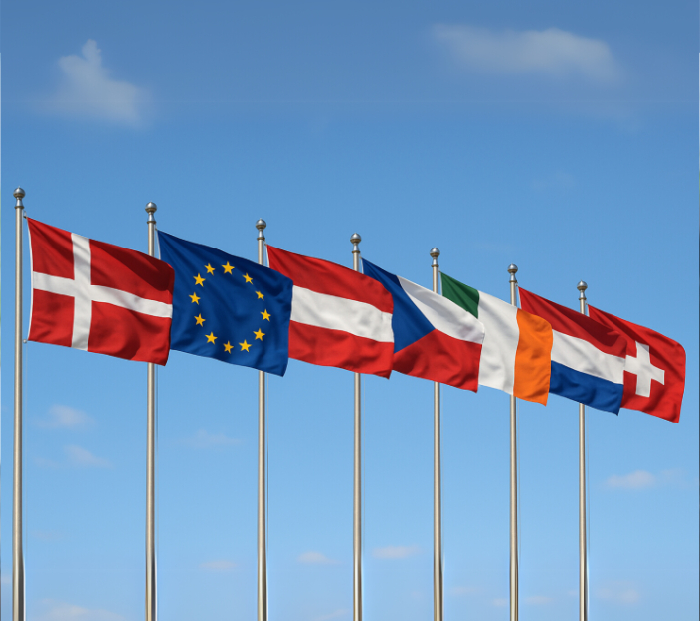
The programme is a delegated partnership supported by the European Union, Austria, Czech Republic, Ireland, Netherlands, Switzerland, and Denmark. The programme is managed by the Ministry of Foreign Affairs of Denmark on behalf of all contributing donors with a Programme Management Unit at the Danish Embassy in Beirut. Further details are available in the full programme document (here).