
What we did: Case Story
Resilience in Every Stitch: A Syrian Mother's Journey to Rebuild Life in Jordan
More Stories
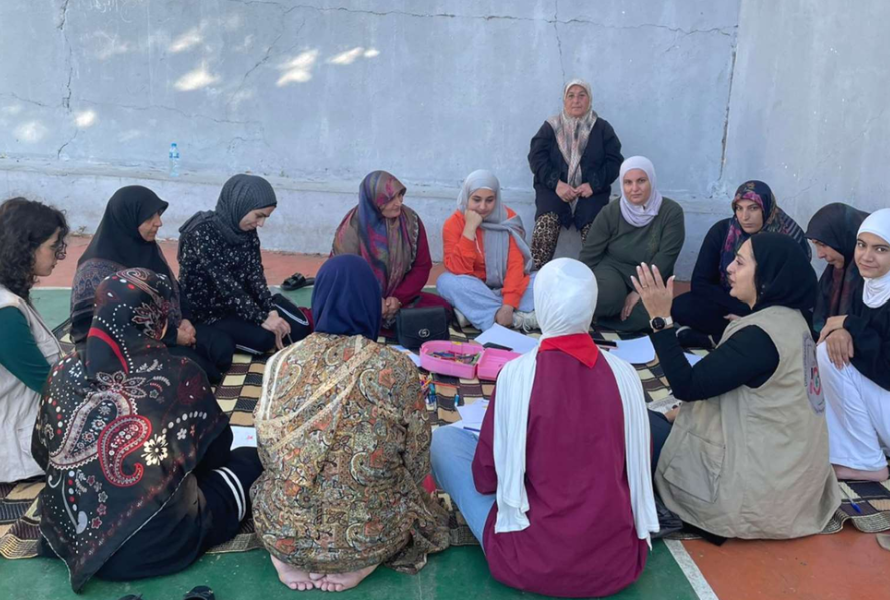
Resilience in Every Stitch: A Syrian Mother's Journey to Rebuild Life in Jordan
Key Information
Resilience in Every Stitch: A Syrian Mother's Journey to Rebuild Life in Jordan
“We grabbed what cash and gold we had in the house and just left”, says Um Samer, mother of five and village seamstress. She recalls the day she and her family fled Syria to Jordan back in 2012. We thought that we would be returning home in no time; next thing you know it’s seven years later and our lives have changed forever.”
Um Samer fled with her husband and three of her children after her son,
then nine-years old, was wounded in a bombing.
“We had enough money to pay rent and meet our needs for a while. Had we
known what would become of us, we would have invested this money in a small
business instead.”
When Um Samer could no longer pay the rent, and her husband and sons
could no longer afford to renew their work permits (60 JOD /85 USD for each
person), her landlord introduced her to other Syrian refugees benefiting from
income-generating activities initiated by local NGOs. Here she met her current
business partner and new friend, Leila.
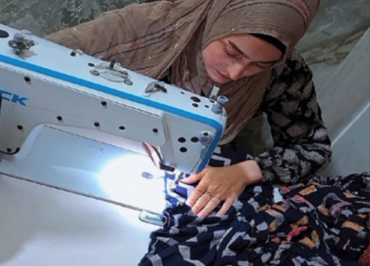
Um Samer and Leila were able to set up a tailoring workshop with the
support of the Jordan River
Foundation (JRF) through their project ‘Community empowerment initiative in the governorate of Mafraq.
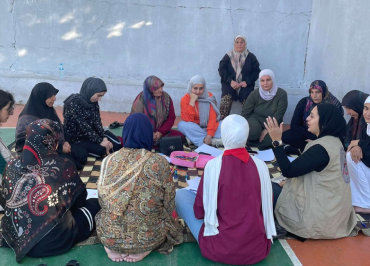
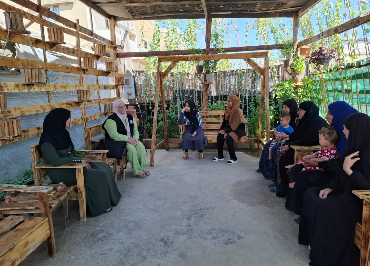
Um Samer and Leila were among 263 Syrian and Jordanian participants who
enrolled in employability and business management trainings, and among 169
graduates who received grants to establish their own microbusinesses. They used
the grant to buy two sewing machines and a sample of raw material.
Combining Um Samer’s tailoring experience and Leila’s crochet skills,
they sew dresses, bedsheets and toys on demand.
“When we first started a year back, we were making around 100 JOD on a
monthly (141 USD)”, Um Samer explains and said that with this income, and the
income her husband and sons make on the rare opportunities they work as house
painters, they managed to get by. But soon, the purchasing power of her
neighbours decreased, and the business experienced increased competition, and, the
profit dropped to 50 JOD per month (70.5 USD).
“The great thing about Um Samer”,
says Leila, “is that she never gives up”; Um Samer began marketing her products
in other villages’ rural bazars, and started stitching local brand logos on
various items until one brand became a paying customer. The business regained momentum,
and the profits increased.
“My youngest 16-year-old son
doesn’t have to work anymore. He instead enrolled in photography training and
is becoming quite a photographer!” the proud mother says, the improved
financial situation has given room for dreams of a better future for the
youngest in the family.
This activity took place during the second phase of the RDPP. JRF is also a partner with RDPP during the
third phase of RDPP III.